capetownatnight.com

Updated January 2026 · written in Cape Town

Cape Town at Night: What's Safe, What's Not (2026)

Cape Town at night is not one place. It is a set of busy, well-lit pockets that are genuinely fine, separated by quiet streets that are genuinely not, and the change can happen in a single block. Eat on Bree Street, drink on Long Street while it is crowded, walk inside the V&A Waterfront, and use a car or an e-hail for everything in between. The three things that cause almost all trouble for visitors are walking long distances after dark, holding a phone in your hand on the street, and stopping in quiet spots such as the Signal Hill viewpoints or a deserted intersection. Get those right and a night out here is unremarkable, which is exactly what you want.

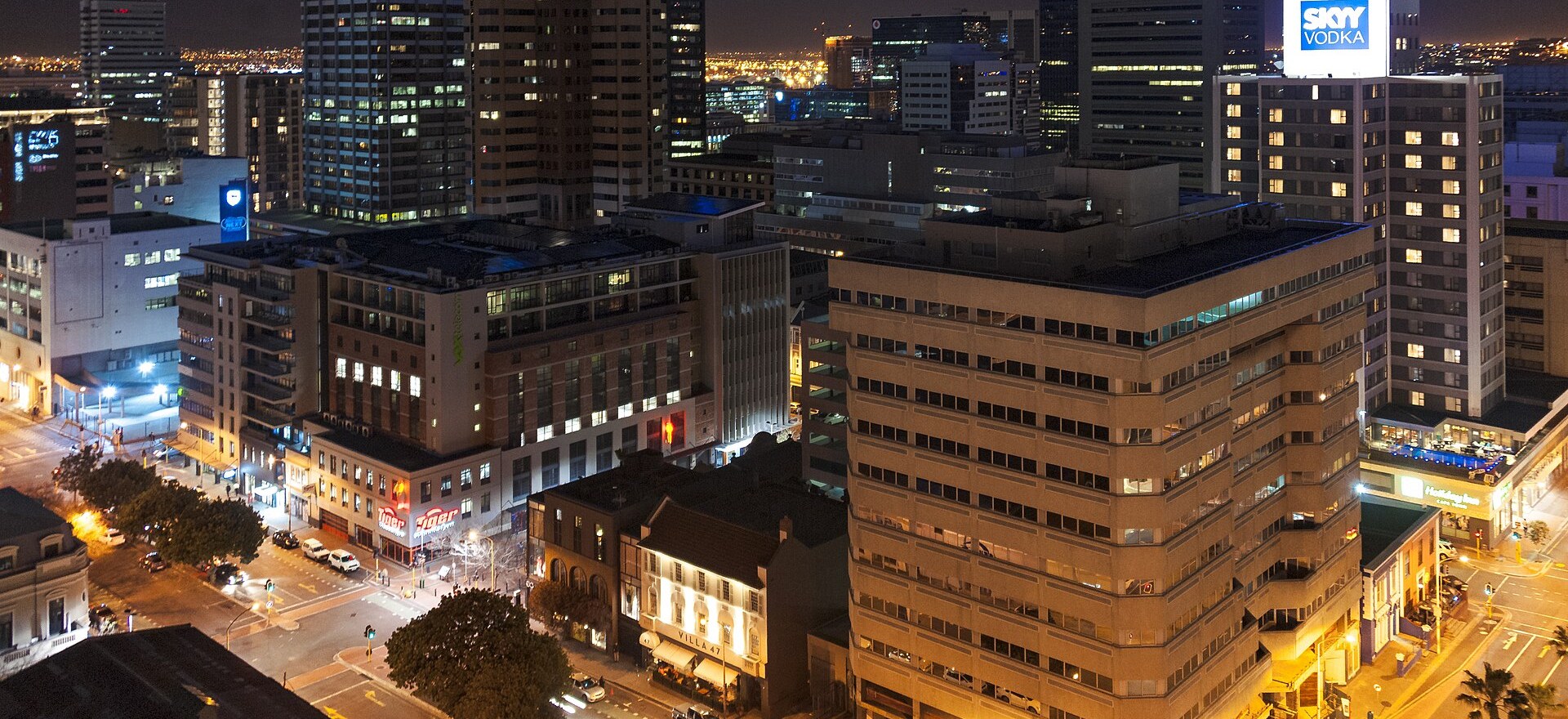
Cape Town CBD streets and office towers lit up at night, seen from a rooftop
The CBD after dark, looking over the streets around Long and Bree. The lit, busy blocks are where a night out is unremarkable. The dark gaps between them are where the trouble is.
Safest bet after midnight
V&A Waterfront
Most common incident
Phone snatching on foot
Default way home
E-hail, door to door

Nightlife by area

Which parts of Cape Town are safe at night?

Six areas people actually go out in, scored for how comfortable they are after dark, with how to get there and back and one thing a local would tell you.

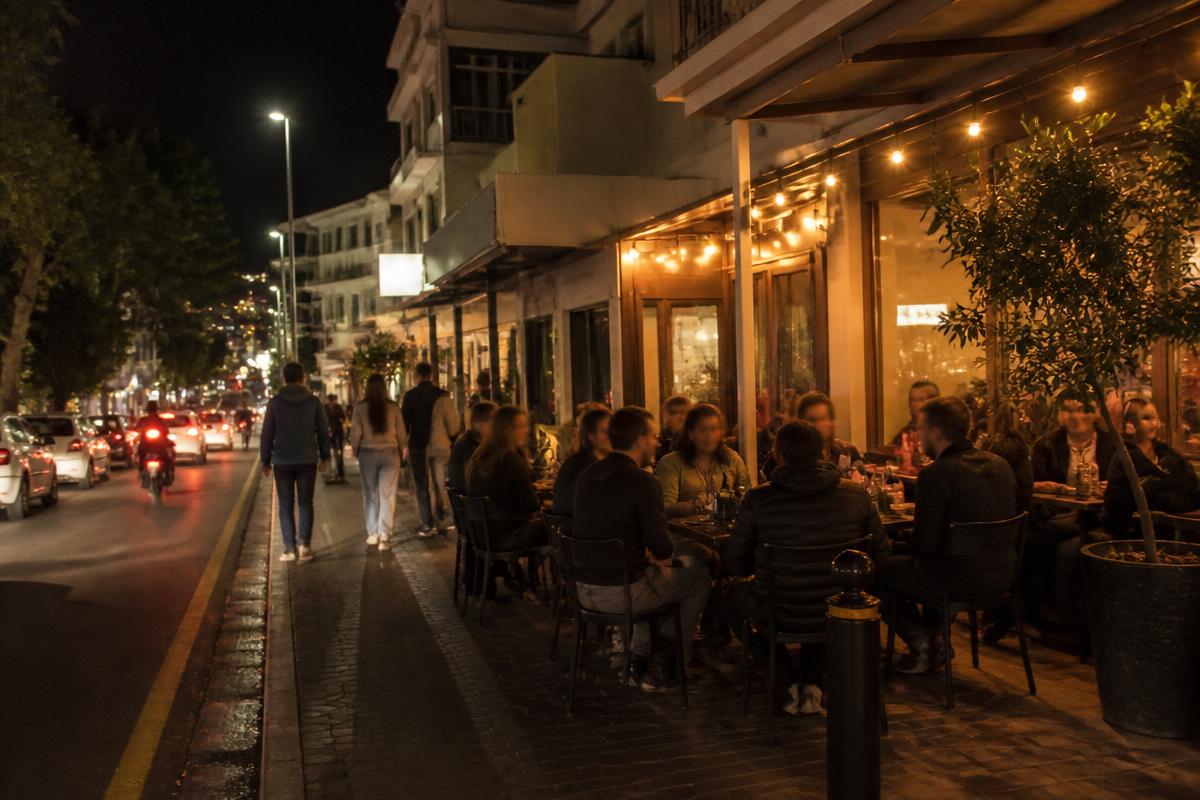
Diners on the pavement outside restaurants on a busy lit street at night
A restaurant block with people on the pavement. Busy and lit is the whole test.

Long Street and the CBD

5/10

Long Street is still the loudest late-night strip in the city, and it is also where most tourist incidents happen. It is fine while it is crowded and gets unpredictable after about 02:00 as the crowd thins and informal parking attendants, dealers and pickpockets take over the pavement.

Getting there and back
Drive in and use a paid parking garage, or take an e-hail door to door. Do not walk to a car parked more than two blocks away, and do not walk east toward the Foreshore or Cape Town Station.

Local tip
Pay the car guard on arrival, not when you leave. It sounds backwards, but it removes the awkward negotiation at 02:00 when you are the only person on the pavement.
Bree Street

7/10

The city's best eating-and-drinking street and noticeably calmer than Long Street one block over. Restaurants keep the pavements busy until around midnight, and there are usually security patrols on the block between Wale and Church.

Getting there and back
E-hail to a specific restaurant rather than to Bree Street generally. Street parking is easy before 19:00 and scarce after.

Local tip
Book anywhere on Bree for 19:00 rather than 21:00. You get the busy-street effect on both legs of the trip and avoid the post-midnight walk to find a car.

Sea Point promenade

6/10 before 21:00, 3/10 after

One of the great city walks and completely different depending on the hour. Until sunset plus an hour or so it is packed with runners, families and dog walkers. Once the light goes, long stretches empty out and the promenade becomes a bad place to be alone with a phone.

Getting there and back
Walk from a Sea Point hotel while it is still busy. After dark, drive or e-hail along Beach Road instead of walking it.

Local tip
Run or walk the section between the Pavilion and the lighthouse, not the far end toward Mouille Point, which loses its crowd first.

Camps Bay strip

7/10

Restaurants and cocktail bars along Victoria Road, lit and busy on summer nights, with visible private security. The strip itself is comfortable. The exposure is the drive out over Kloof Nek and Signal Hill, which is dark and quiet.

Getting there and back
E-hail is straightforward until roughly midnight, then supply thins and surge climbs. If you drive, park on Victoria Road where there is foot traffic, not on the residential side streets above it.

Local tip
Do not stop at the Signal Hill or Kloof Nek viewpoints on the way home. They are known robbery spots after dark, even with other cars parked there.

V&A Waterfront

9/10

The most controlled environment in the city at night: private security, cameras, lighting and constant foot traffic well past midnight. If it is your first night in Cape Town or you are travelling with kids or nervous friends, start here.

Getting there and back
Secure paid parking throughout, a marked e-hail pickup zone, and short internal walks that are genuinely fine on foot.

Local tip
Use the Silo District e-hail pickup instead of the main mall entrance on busy nights. Same walk, a fraction of the queue.

Observatory

4/10

Student bars, live music and cheap food on Lower Main Road, with a real local crowd. The venues are good and the surrounding streets are poorly lit, with regular muggings on the walk between Lower Main and the railway line.

Getting there and back
E-hail directly to the venue door. Do not use Observatory or Salt River stations at night, and do not walk the subway under the railway line.

Local tip
Ask the bar to call your ride from inside and wait at the counter until it arrives. Every Lower Main venue is used to doing this.

Getting around after dark

How do you get around Cape Town at night?

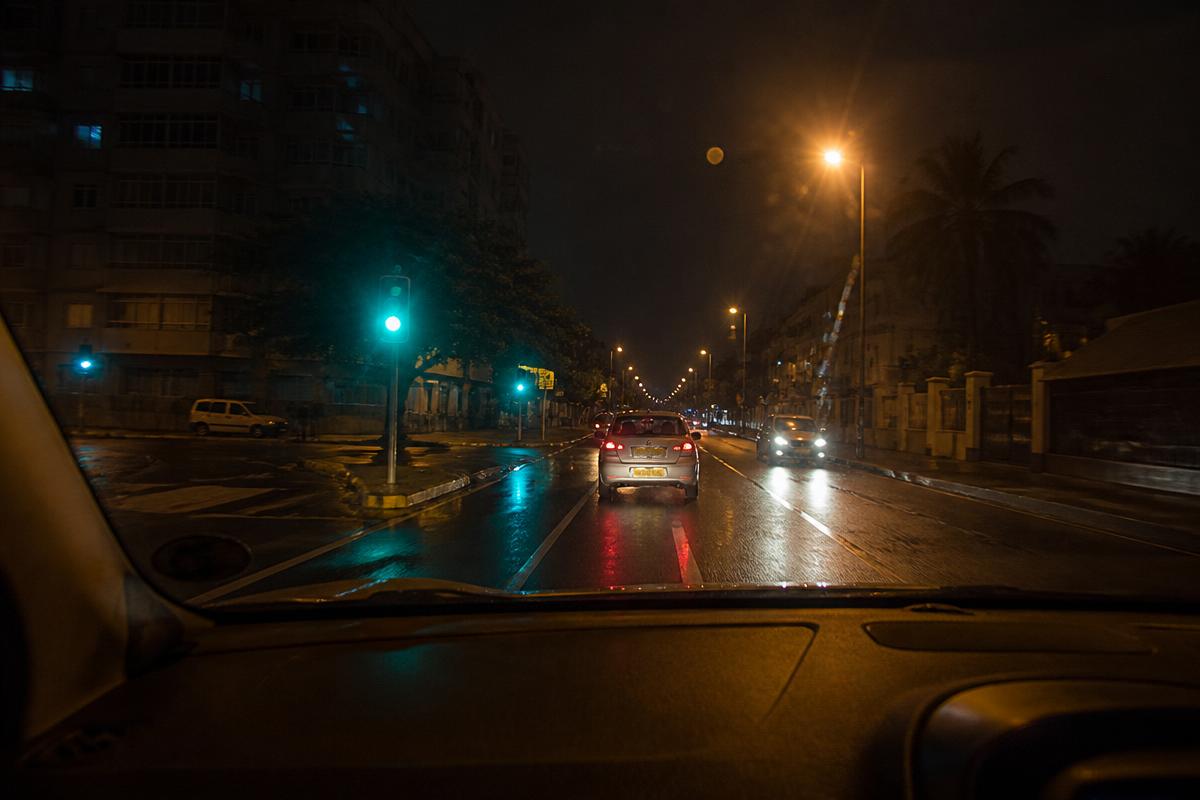
View through a car windscreen of a wet Cape Town street at night
Doors locked, bags in the footwell, a car length at the lights. That is most of it.

Driving at night

Doors locked, windows up, bags in the footwell and out of sight. Leave a car length at red lights so you can always pull away. At deserted intersections after midnight most locals slow, check and proceed rather than sit still. Watch for loadshedding: when traffic lights are out, treat the intersection as a four-way stop and expect other drivers not to. Petrol stations are attended and are a safe place to stop if you are unsure of a route.

Uber and Bolt after dark

Both work well and are what most people use to get home. Wait inside the venue, check the plate and driver against the app, sit in the back and share your trip. Cancel and rebook if a driver asks for cash off-app. Expect surge after last rounds on Friday and Saturday, and expect fewer cars in Observatory, Woodstock and the far Atlantic Seaboard after 01:00.

Walking between venues

Short hops on busy lit streets are normal. Bree to Long, along Kloof Street, inside the Waterfront. Keep your phone in a pocket, not in your hand, and carry one card and some cash rather than everything you own. Avoid the Foreshore, the area around Cape Town Station, Company's Garden, De Waal Park and any street where you are the only person on it.

Late airport arrivals and departures

Cape Town International is fine at any hour, and the drive in on the N2 is fine too. Book an e-hail from inside the terminal at the marked pickup zone, or arrange a hotel transfer if you land after midnight. Do not accept help from anyone offering a lift outside the official ranks, and do not stop on the N2 shoulder between the airport and the city for any reason.

ATMs at night

Draw cash during the day. If you must do it after dark, use an ATM inside a petrol station, hotel lobby or the Waterfront, never a street-facing machine. Decline all offers of help at the machine, including from people in what looks like uniform, and if a card is retained, call your bank yourself rather than any number displayed on the machine.

Straight answers

Cape Town night safety questions

Is Cape Town safe at night?

Cape Town is safe at night in specific, well-used places and genuinely risky in others, and the two can be one block apart. Inside busy nightlife strips like Bree Street, Kloof Street, the V&A Waterfront and the Camps Bay beachfront, an ordinary night out passes without incident for most people. Risk rises sharply when you leave those pockets on foot, walk quiet side streets, cut through Company's Garden or the Foreshore, or stop at a deserted intersection. Treat safety as street-by-street rather than city-wide, keep your phone out of sight, and use a car or an e-hailing trip for anything more than a short, busy walk.

Can I walk around Cape Town at night?

You can walk short distances between venues on busy, lit streets. Bree Street to Long Street, along Kloof Street, on the Sea Point promenade before about 21:00, and inside the V&A Waterfront are all normal walks. What locals do not do is walk long distances after dark, walk alone in the CBD after the restaurants close, walk on the Foreshore or under the highway bridges, walk on beaches or hiking paths, or walk while holding a phone. Phone snatching is the most common crime tourists experience, and it happens fastest to people looking down at a screen.

Is Uber safe at night in Cape Town?

Yes, e-hailing is the standard way locals get home after drinks, and Uber and Bolt are both widely used at night. The usual precautions matter: check the plate before you get in, ride in the back, share your trip, and wait inside the venue rather than on the pavement. The known friction points are pickups near taxi ranks and at the airport, where drivers are sometimes intimidated, and cancelled trips in quiet areas late at night. If a driver asks you to cancel and pay cash, cancel and rebook. Metered taxis are safe too but cost roughly double.

Is it safe to drive at night in Cape Town?

Driving is the safest way to move around after dark, with two real risks: smash-and-grab at quiet intersections, and drunk drivers, especially on weekend nights and on the N1, N2 and M5. Keep bags and phones out of sight and in the footwell, drive with windows up and doors locked, leave a car length at red lights so you can pull away, and treat a red light at a deserted intersection as a stop-and-go if it is safe to proceed. Avoid loadshedding blackspots where traffic lights are out, and never stop for anyone flagging you down on a highway shoulder.

The tool this guide keeps pointing at

Clearpath Routes: navigation that routes you around the bad blocks

Clearpath Routes is safe-route navigation built for Cape Town. It highlights danger zones, hijacking hotspots and known smash-and-grab intersections, then routes you around them instead of straight through. Most useful after dark, when the shortest route and the sensible route are rarely the same one. Free while it is in early access.

  • Danger zones drawn on the map, not buried in a list
  • Night routing that prefers lit, used roads
  • Works for driving and for walking between venues